
Barbenheimer, the portmanteau for Barbie: The Movie and Oppenheimer, captured headlines this summer. But how did two films that were seemingly polar opposites get grouped into a suggested double-header and become so inextricably linked? At face value, the only thing they share is a premiere date: Barbie, a feminist parody poking fun at the idealistic lifestyle from children’s imagination, dripping in pink with intricate and oversaturated sets and musical numbers; Oppenheimer, a somber film about the “father of the atomic bomb,” with a mix of muted colors and tense scenes in black-and-white. In this edition, Communication faculty members help explain the nuances of these films and show how they have more in common than first meets the eye.
Both stories follow influential and controversial characters who fundamentally altered society. J. Robert Oppenheimer’s leadership at Los Alamos helped the U.S. turn a corner to bring an end to the Second World War and changed the future of warfare and geopolitics. Despite her diminutive stature, Barbie has also greatly impacted our culture and generations of women and children who played with the dolls, as professor Grace Giorgio explains later.
Both films were also the subject of criticism. The Barbie movie takes shots at a male-dominated capitalist society, yet was produced in partnership with Mattel, the doll’s manufacturer. Despite some jokes being lobbed at Barbie’s parent corporation, the company leaves the movie relatively unscathed. Premiering so close to memorials of the bombings in Japan may have contributed to the fact that Oppenheimer did not (and has not yet at the time of writing) been released there. Critics also see the story as framed too narrowly through the lens of its eponymous protagonist, arguing that too little is told of the victims.
Despite criticism, these films outperformed expectations. To date, Oppenheimer has grossed nearly $1 billion worldwide; Barbie has grossed nearly $1.5 billion. With their release, AMC reported its highest-earning week since the company’s founding. These films also drive meaningful, and sometimes difficult conversations. Some of these concepts are also used in the classroom and drive the scholarship of the Department of Communication.
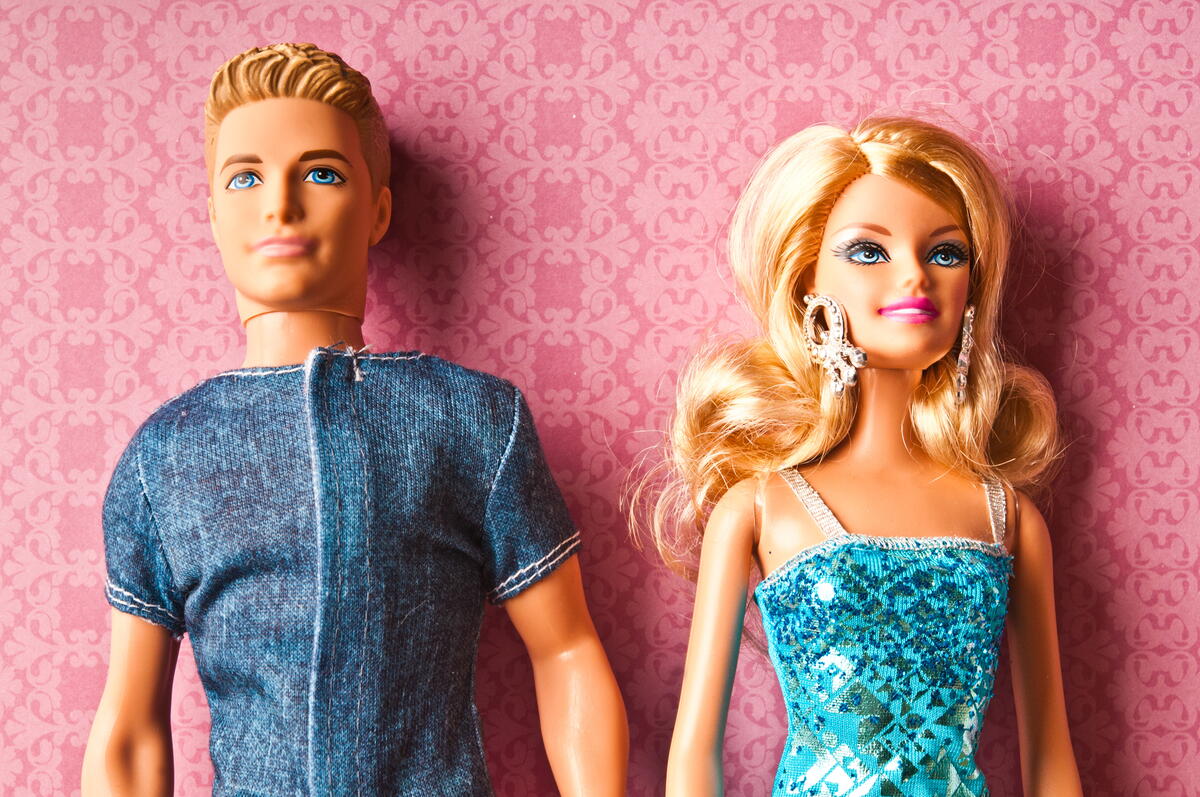
Playing with gender roles: What a plastic doll can teach us about society
Compared to J. Robert Oppenheimer, the head of a scientific revolution that ended the Second World War and caused hundreds of thousands of civilian deaths, a toy might seem to be an inconsequential figure in history. However, such is Barbie’s influence that students can still learn a lot from studying the toy and its impact on society. Read more about how professor Grace Giorgio uses the doll to teach important concepts in her gender communication class.

Blast from the past: A ‘hero’ from history helps make sense of the chaos
Fewer than 120,000 U.S. World War II veterans are still alive in 2023. People who lived through the war are relatively few. Why then, in an age of shortening attention spans and character limits, would a three-hour-long biopic about J. Robert Oppenheimer interest the modern audience? Although the dust may have settled long ago, a fresh look at the “father of the atomic bomb” may still have something to teach us about the present, according to professor Ned O’Gorman.
Editor's note: A version of this story was originally published as part of a "Barbenheimer" series in our Fall 2023 newsletter.