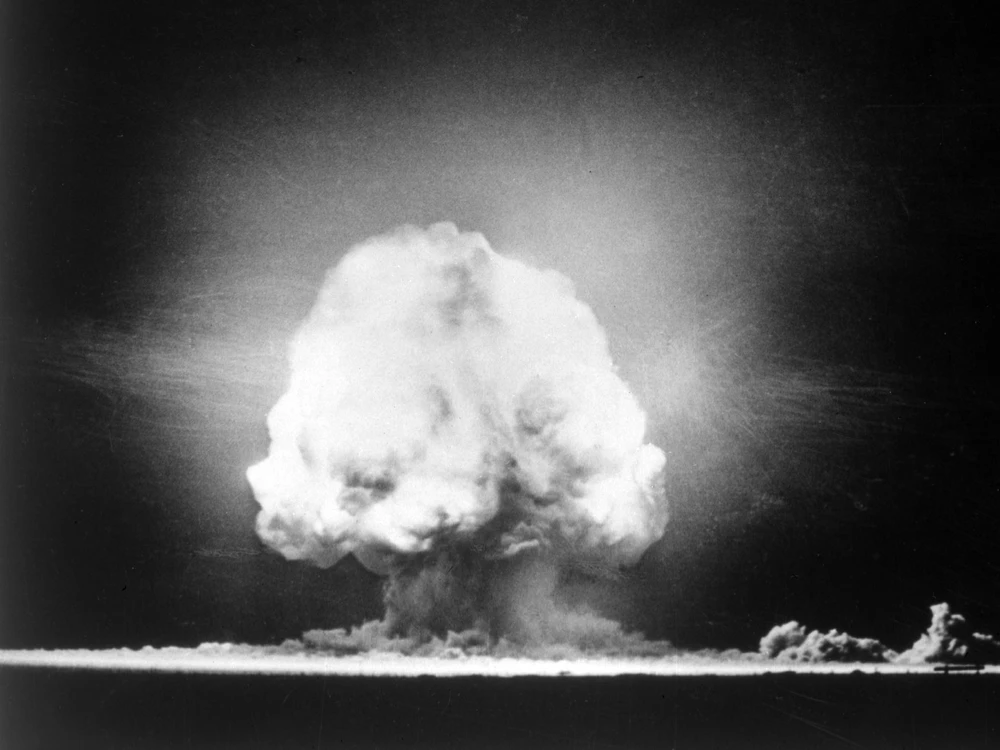
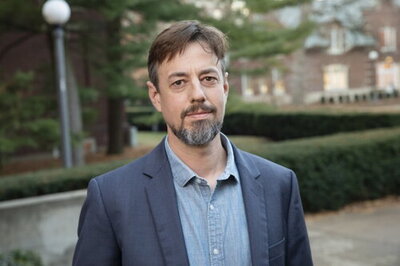
Fewer than 120,000 U.S. World War II veterans are still alive in 2023. People who lived through the war are relatively few. Why then, in an age of shortening attention spans and character limits, would a three-hour-long biopic about J. Robert Oppenheimer interest the modern audience? Although the dust may have settled long ago, a fresh look at the “father of the atomic bomb” may still have something to teach us about the present, according to professor Ned O’Gorman.
During difficult moments or times of uncertainty, we look to the past for comfort, reassurance, or answers, he said. People are looking to make sense of the seemingly incessant chaos in increasingly uncertain times, and films like Oppenheimer and Barbie — perhaps more unexpectedly — can help us think through the complexities of the present. They drive important conversations and debates that give us direction.
People use stories to make sense of things, often looking for a hero or villain. But many of the disasters we have had over the last 15 years have lacked clear villains, O’Gorman said.
“There is something about the impersonal nature of 21st century life, that it seems like things come to us out of nowhere for reasons that we cannot understand and with no apparent motive behind them. We live in a world where a lot of things seem to happen without anybody behind the wheel.”
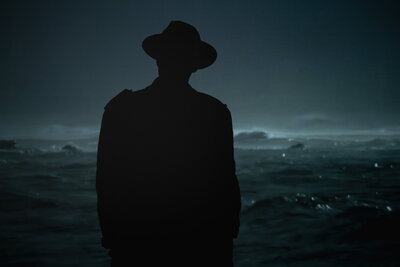
For large swathes of the modern audience without memories of the Second World War or the nuclear arms race that followed, it makes sense to reframe history in a way that immerses you in the story. O’Gorman claims that Oppenheimer director Christopher Nolan, who also directed a Batman trilogy, essentially made a superhero film out of this historical event. There are clear parallels between the protagonist and Batman, argues O’Gorman; Oppenheimer, a hero with a complicated personality — a rebel working with the law but often finding himself at odds with it, much like Bruce Wayne in Gotham City.
“There’s something about the catastrophic character of Oppenheimer and the history of which he was a part — the advent of nuclear weapons, its potential to destroy the world — that is also very much in the consciousness of the 21st century,” he said, alluding to the possibility of global catastrophes stemming from climate change or the escalation of political tensions and armed conflicts in Europe, the Middle East, and Asia. “I think he very skillfully tapped into the zeitgeist, and particularly, contemporary anxieties,” said O’Gorman.
According to him, we use films not just to reevaluate the past, but to make sense of the present.
“History itself is complex. People are complex. These films are helping us learn how to think through complexity, and I think Oppenheimer does that somewhat successfully. As a historian, I’m with the others who have lots of criticisms about what was misrepresented or what was left out, but you can only ask so much of a Hollywood film.”
Film itself is an ideal medium for stories like these because of its immersive qualities, argues O’Gorman. In his book, “Lookout America! The Secret Hollywood Studio at the Heart of the Cold War,” O’Gorman and co-author Kevin Hamilton describe how a little-known studio run by the Air Force used film to win the hearts and minds of policymakers and advance its strategic goals.
“In the most abstract sense, why is film used to frame narratives, to sell products, to sell stories — be they historically grounded or purely fictional in nature? I think it has a lot to do with the spectacle,” he said.
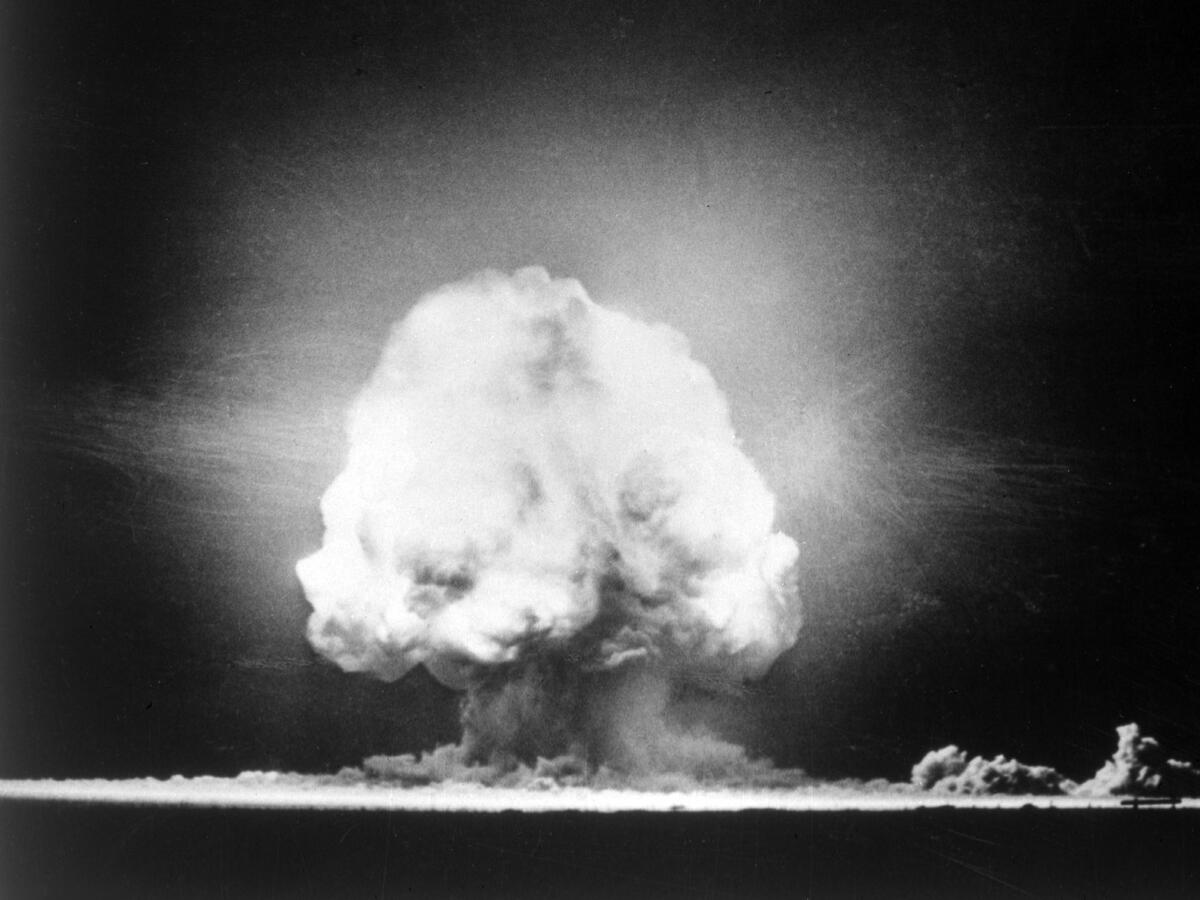
Picture yourself in a dark IMAX theater. Undisturbed by the distractions of the quotidian, the close-ups on the massive screen make it seem like you are in the room. The tension permeates the theater as anxious bystanders await to see if the Trinity test results in the small but not impossible outcome of igniting the atmosphere and destroying the entire planet. You share in their anticipation until you experience a blinding flash of light and rumbling audio as the bomb detonates, which quickly transforms into a deafening silence that gives goosebumps. You can see why O’Gorman believes that artfully shot films with expertly composed sound design and gripping narratives can be more effective than other types of media.
For O’Gorman, studying how we communicate through film is valuable. “It accomplishes so much if you can teach students how to watch film and work with film and talk about film. They can pick up a novel, they can pick up a presidential speech, they can listen to a debate on the radio, and they should be able to use those same skills to parse and critique and engage with what’s before them.”
“To me, the most basic form of cultural, civic, and professional literacy is how to be literate about images, about moving images, about messages that come to us on social media. If you are going to have any compass in the world in which we live, it has got to be a critical compass or else you’re going to get lost — and there’s a lot of folks who are lost, politically, civically, and otherwise,” he added.
His advice to the public is to go watch great films in theaters with others. “If we all were willing to give our three hours to one thing and then talk about it with other people, there’s all kinds of great — maybe unintended — consequences that can come out of that kind of thing.”
Editor's note: A version of this story was originally published as part of a "Barbenheimer" series in our Fall 2023 newsletter.