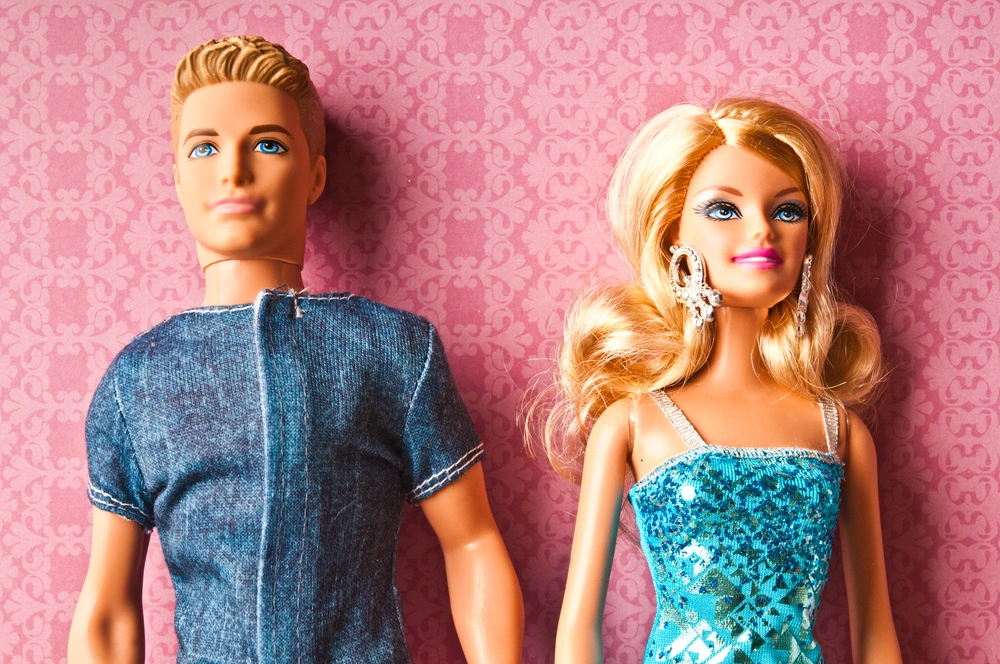
Compared to J. Robert Oppenheimer, the head of a scientific revolution that ended the Second World War and caused hundreds of thousands of civilian deaths, a toy might seem to be an inconsequential figure in history.
However, such is Barbie’s influence that professor Grace Giorgio uses the doll to teach important concepts in her gender communication class. According to Giorgio, toys are a great way to illustrate how we reinforce gender norms. The types of toys children play with are often dictated by gender, with girls often being given dolls, whereas boys are more likely to receive trucks or weapons. Even when the gendered toys are similar in nature, the ways they are presented and the terms we use for them are different (think “doll” versus “action figure”).

Barbie provides a particularly interesting case study. Using the documentary “Tiny Shoulders: Rethinking Barbie,” students in Giorgio’s gender communication class learn about the rise and evolution of the doll and how it helped shape society. Giorgio describes how the doll was a stark contrast from the baby dolls that encouraged girls to become mothers. Barbies tapped into girls’ imaginations and enabled them to envision a future with a career, a car, and a house of their own.
Over time, Barbies changed to mirror a changing society during the rise of and pushback against feminism. Barbie’s gaze would shift from downcast, perceived to be deferential or non-confrontational, to more direct and confident. “Barbie even tracks the backlash,” said Giorgio. “In the ‘90s, you would pull the string and she would say things like, ‘Math is hard!’”
But much like Oppenheimer, Barbie is a flawed character. Her origins represented opportunity for a particular type of woman: privileged (read: white). As the documentary points out, the doll also reinforced unrealistic body ideals, with proportions that some have argued are not only dangerous, but physically impossible to achieve.
“The Barbie toy allows us to talk about bodies,” said Giorgio, pointing to why this toy, in particular, furthers discussion in gender communication. “Our gender is very much embedded not just in our minds and our experiences, but also in our bodies.”
Having taught several iterations of the gender communication course since 2009, Giorgio has had to update the content several times to keep the materials relevant to societal changes. In the next version, she plans to incorporate Barbie: The Movie as part of the course materials.
Barbie undoubtedly triggers nostalgia for the many generations that grew up playing with the dolls since its initial release in 1959, which may explain part of Barbie: The Movie’s commercial success. Nostalgia has long been used to sell products, and media production companies are no exception, rebooting popular series or movies and producing originals in settings that allow audiences to reminisce, like Netflix’s Stranger Things.

“It helps us to conserve something that we feel like we’re losing or to reconnect with something that we feel like we’ve lost,” said professor Ned O’Gorman, whose forthcoming essay, “Memory at the End of History” discusses collective memory in the ‘90s and how people look to the past during moments that feel strange or unfamiliar.
Even though some have criticized it as corporate propaganda at times, Giorgio believes that Barbie cleverly deals with important topics. Presented in a way that anyone could laugh at — men included — the film and its characters find themselves having to literally overthrow the patriarchy to restore Barbieland to its former glory, learning important lessons along the way. An impassioned rant from America Ferrera’s character about how impossible it is to be a woman encapsulates just some of the struggles that women face personally and professionally.
On the decision to let Greta Gerwig go forward with satire about its top brand, Giorgio said it was a risk Mattel knew it could take. “Do they really believe in that manifesto? Probably not. Some of them might. But Greta Gerwig does, and they were brave to bring her on and have her write the script and go ahead with what she did.” Studying how we communicate — including through popular culture — is fundamental, she said, because the ways we communicate are so complex. They play a role in shaping our culture and help us understand our society and how we fit into it.
The skills students learn in classes like hers, she added, will help them understand not only how to communicate effectively, but how to understand other people’s perspectives. According to Giorgio, regardless of where their future careers lead them, students will undoubtedly have to make decisions that affect others, and the lessons they take from the classroom will set them up for success long after they graduate.
Editor's note: A version of this story was originally published as part of a "Barbenheimer" series in our Fall 2023 newsletter.