 The Department of Communication lost a beloved colleague and longtime teacher when Tom Costello passed away on April 15, 2020. Tom taught decades of University of Illinois students, and was especially influential in the lives of our undergraduate majors. While many across Champaign-Urbana...
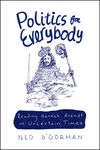 It may seem incredible in an age of polarized division, but Ned O’Gorman is making a proactive case for politics. His new book “Politics for Everybody” is true to its title. It’s a “defense of politics for...
 “Shelter in place” is now the norm in much of the country, thanks to COVID-19. As a result, connections once made face to face are now happening electronically in both work and personal lives. John Caughlin heads...
- The University of Illinois Library celebrates the tenure and promotion of faculty by giving them the opportunity to select a book to be added to the Library collection in their honor. As the Library states, each book is book-plated and "stand as a reminder now and into the future of the remarkable...
 E-cigarettes get teenagers hooked on nicotine. Or they aid cigarette smokers seeking to quit. Or they may be harmful in other ways. Those competing messages make the devices a tricky subject for health communicators, says Cabral Bigman, a professor in the Department of Communication whose...
 The Department of Communication ranked number one among Liberal Arts and Sciences majors in a new study by the Illini Success Initiative. The study found that "new graduates from the College of LAS continue to be successful at securing a first destination soon after graduation... and those who have...
 Although it is clear that the assembling groups with diverse perspectives and talents can provide opportunities for insight and efficient work, working in groups can present particular challenges. Differing schedules, expectations, and definitions of success can slow down or entirely...
 JungHwan Yang's work helps us understand how people access and respond to political information, and he employs various computational and statistical methods to examine these important topics.
 The Ruth Anne Clark Graduate Student Scholar Award Fund was established to honor Professor Clark's 40 years of distinguished service to the department. Over the years, the award has made it possible for many Illinois graduate students to conduct their research. We heard from some of them about the...
 20 slides. 20 seconds each. 6 minutes and 40 seconds in total. 6 participants. 1 evening of storytelling, fun, and Pechakucha. The word, meaning “chit-chat”, is the name of a public speaking competition that originated in Tokyo in 2003. Each speaker in the event has 6 minutes and 40 seconds to tell...
 The College of Liberal Arts and Sciences recently named Communication alumni Nancy Greenwalt (BA '89) a recipient of the 2017 LAS Humanitarian Award. Greenwalt has dedicated her career to bringing healthcare to those in need, and she says that her communication classes first opened her eyes to...
 The Department of Communication at the University of Illinois at Urbana-Champaign seeks a full-time tenure-track or tenured faculty member at the rank of Assistant or Associate Professor in the area of Health Communication. For more information, check out the job posting...
 Professor Robert McChesney has published numerous books on the relationship between media and politics, and how those relationships influence public discourse in democratic societies. His recent work has examined how media technology changes the political and economic landscape. In response...
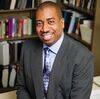 Professor Travis Dixon studies how stereotypes influence and affect audiences of media content. In a recent collaborative project, Professor Dixon investigated the prevalence of stereotypes associated with rap music, such as substance abuse, misogyny, and violence. His project found that such...
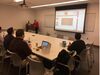 The Health Communication: Barriers, Breakthroughs, and Best Practices (HCB3) Conference took place on March 1-3. The online conference is sponsored by the Health Communication Online Masters of Science (HCOM) program which was started 7 years ago by...