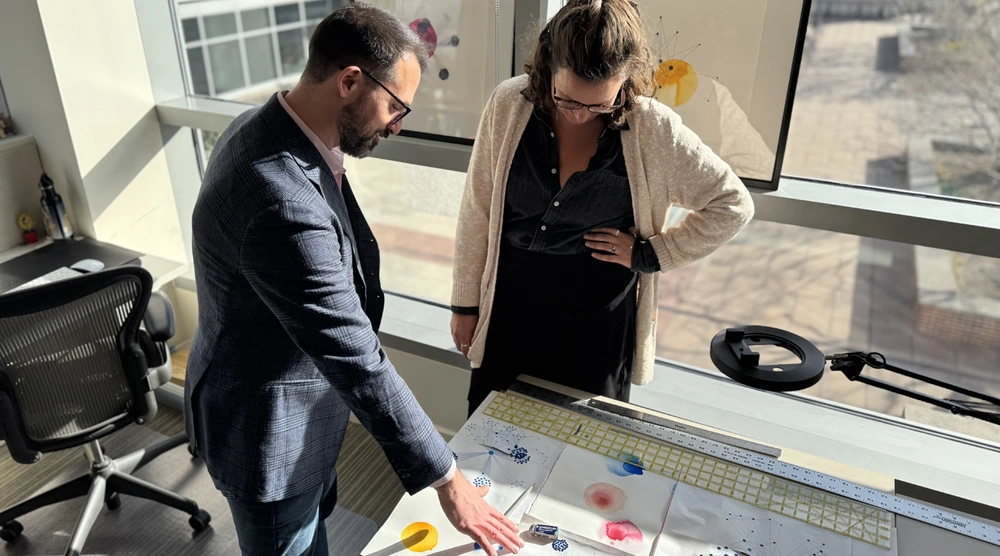
In some cases, science inspires creative works of art. In other cases, the art itself inspires unique scientific research. Either way, novelty is generated through the interaction and exchange of knowledge from differing perspectives. This underlying concept of interdisciplinary collaboration is at the heart of William Barley’s research on team science.
Barley, the director of graduate studies and associate professor in the Department of Communication, focuses on the dynamics that make teams successful. His research explores the challenges that individuals face as they collaborate across knowledge boundaries and the strategies that interdisciplinary teams use to productively manage their differences. This work informs his role within the Carl R. Woese Institute for Genomic Biology as a faculty advisor to the director in team science.
In a recent Nature Scientific Reports publication titled, “Rare Gems: researchers from unconventional departments provide greater brokerage in interdisciplinary sciences,” Barley and his colleagues examined how scientists who have joined interdisciplinary research institutes compare to those who haven’t.
“This paper is asking, ‘Does joining an interdisciplinary research institute that has resources devoted to facilitating teams and collaboration meaningfully shape researcher’s careers and how?’” said Barley. “The study is looking at not only whether or not joining these types of institutes has an effect, but who it affects and why, compared to other people.”